Federal authorities charged 36 people in a drug trafficking and money laundering operation tied to Mexico's Sinaloa Cartel that reached into Charleston, Dorchester and Berkeley counties.
U.S. Attorney Bryan Stirling announced the charges Tuesday, Nov. 10, at a press conference in Columbia, as reported by The Post and Courier. He was flanked by more than a dozen federal, state and local law enforcement officials.
The operation touched 16 counties across the Lowcountry, Midlands, Pee Dee and Grand Strand regions. Twenty-seven state law enforcement agencies helped investigate the case, according to Stirling.
What investigators seized
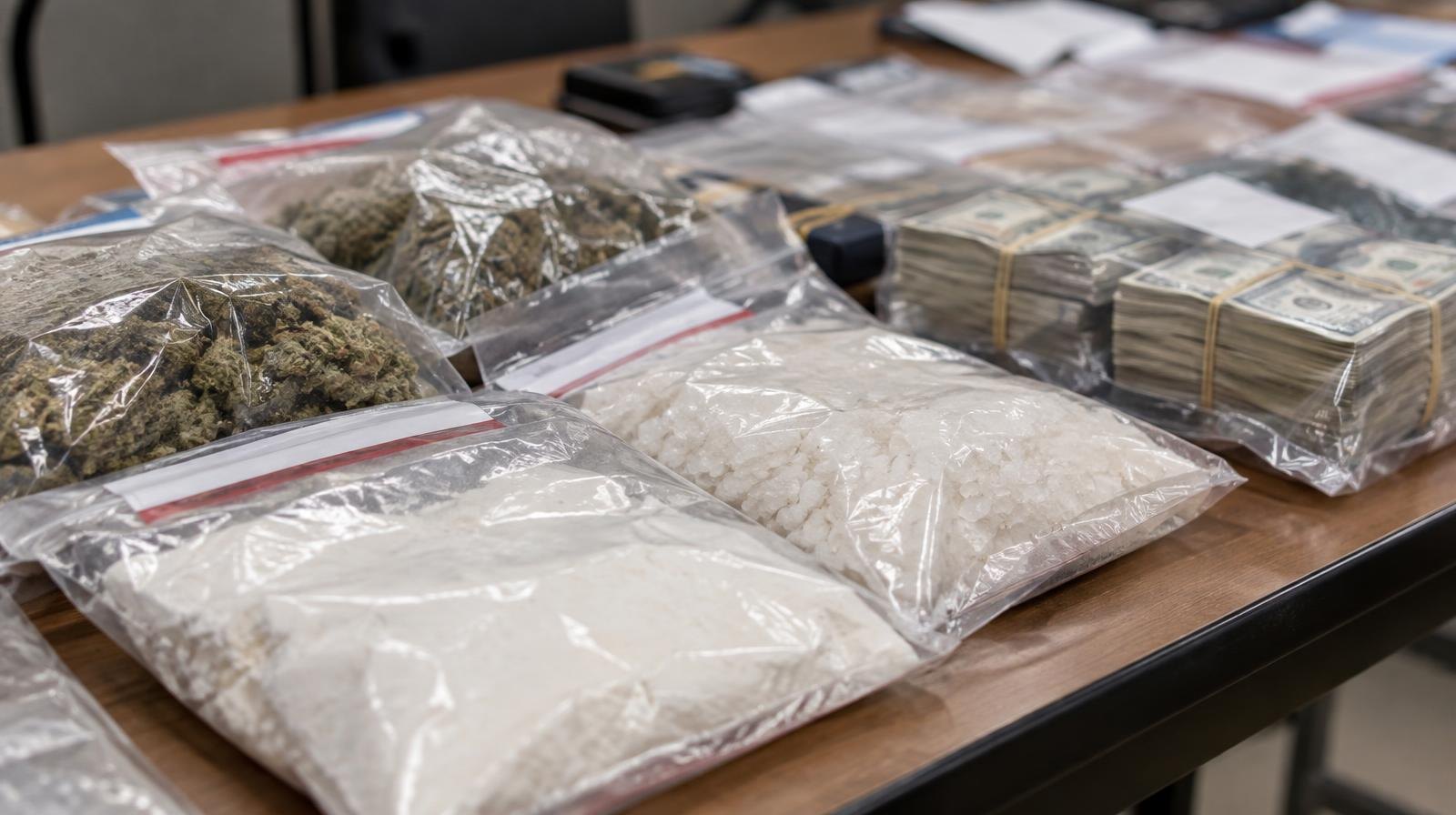
The Drug Enforcement Administration (DEA) seized 346 kilograms of fentanyl, 23 kilograms of methamphetamine, 70 kilograms of cocaine, 34 pounds of marijuana and 43 firearms during the investigation. Agents also seized more than $2.8 million in cash.
The Justice Department said agents took 15 luxury vehicles, including two Rolls-Royces, a Lamborghini and an Aston Martin. Authorities also filed legal claims against 17 properties in South Carolina and Georgia with a combined estimated value of nearly $4 million.
Cartel ties and prison brokers
Michael Tooley, the DEA's assistant special agent in charge overseeing South Carolina, said the organization has "direct ties to the foreign terrorist organization, the Sinaloa Cartel." He said members had been operating in and out of state prisons for more than a decade.
The investigation identified a Mexico-based trafficking and money laundering organization operating in South Carolina since at least 2011, according to the Justice Department. The group allegedly supplied the state with hundreds of kilograms of fentanyl and cocaine since at least 2021.
A central piece of the alleged operation ran through prison walls. Stirling said incarcerated brokers at the South Carolina Department of Corrections (SCDC) used contraband cellphones to arrange drug sales with outside distributors. Those brokers coordinated shipments with organization leaders in Mexico and couriers in the Midlands, Stirling said. The organization recruited new brokers in prison, specifically targeting bilingual inmates, he added.
Stirling relayed testimony from South Carolina Law Enforcement Division (SLED) Captain Frank O'Neal, who said 100 percent of the drug cases SLED has investigated in South Carolina have a connection to the state prison system.
How the charges unfolded
An April 2026 indictment charged 18 members of the alleged operation. A 42-count superseding indictment, unsealed in November according to the Justice Department, added 16 defendants. Two truck drivers were charged separately in July 2025 in connection with what FITSNews reported Tooley described as the largest fentanyl seizure in South Carolina history. Those two have pleaded guilty and been sentenced, Stirling said.
Six defendants total have pleaded guilty so far. The remaining defendants are presumed innocent unless proven guilty.
Stirling said penalties vary. Some defendants face a maximum of five or 15 years in prison. Repeat offenders could face up to life, he said.
Prison cellphone vote ahead
Stirling said the Federal Communications Commission is expected to vote Nov. 19 on whether to allow prisons to jam cellphone signals. He said he felt "optimistic" about the outcome.
SCDC Director Joel Anderson attended the press conference and is "continuing to fight" for the measure, Stirling said. Stirling said blocking those communications would make prisons safer, though he acknowledged "it won't cure all the crime."
The investigation remains ongoing. Assistant U.S. Attorneys Mike O'Mara and Cole Shannon are prosecuting the case.
The Charleston County Sheriff's Office reminds residents that free naloxone is available at naloxone stands across the county. Anyone who witnesses a suspected overdose should call 911 and administer naloxone if available.