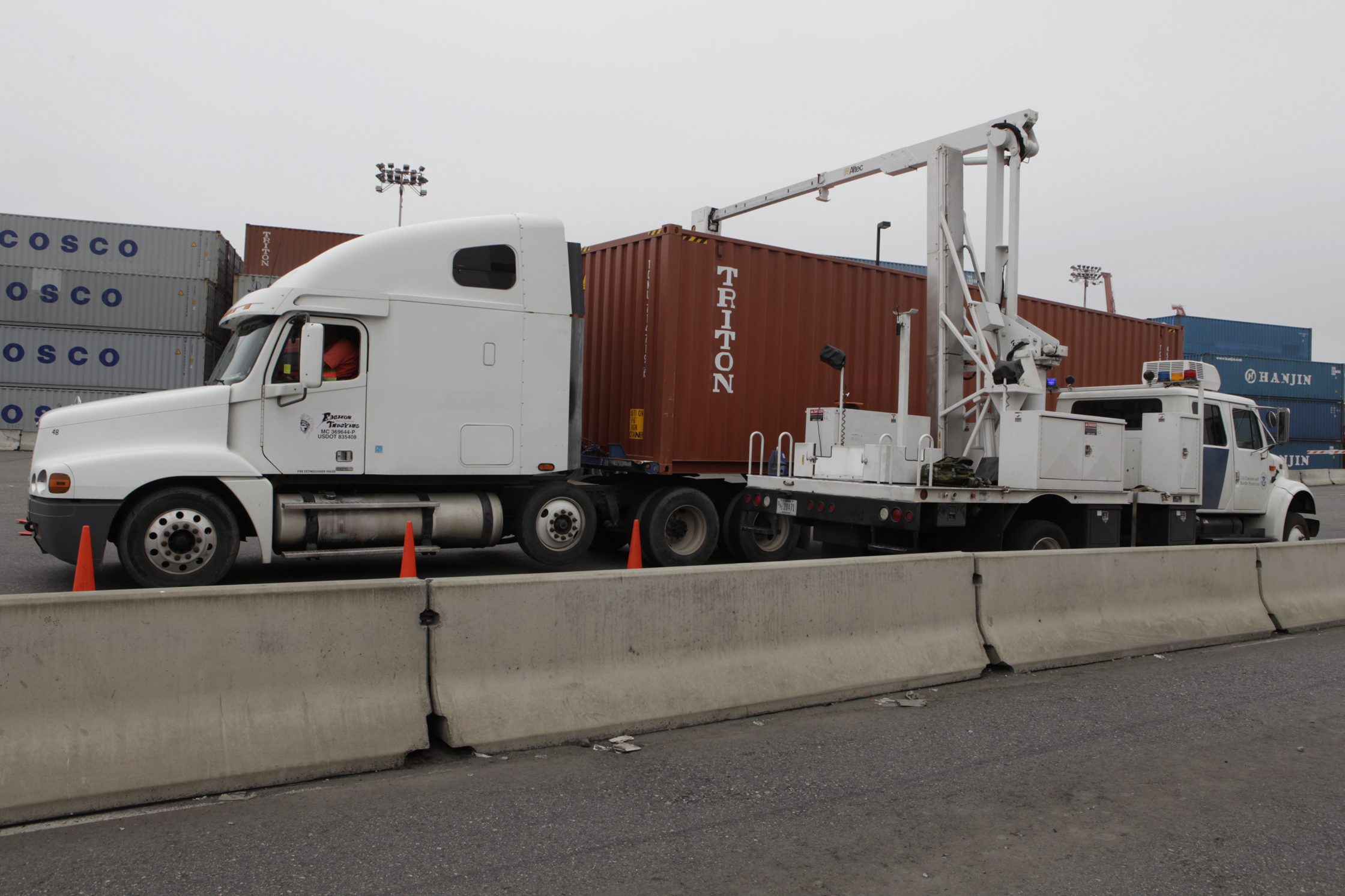
Nearly 130 port truck drivers and 15 trucking companies stopped hauling shipping containers at Charleston-area marine terminals Monday, Nov. 9, in a work stoppage over what drivers describe as steep pay cuts and growing safety concerns.
The stoppage affected more than half of the roughly 200 drivers who typically move cargo through North Charleston each day, according to company owners who spoke with WCBD News 2. Those drivers typically handle about 1,200 container moves daily, with some loads weighing as much as 90,000 pounds, the station reported.
Drivers and carrier owners told WCBD that the rate paid for each container move has been nearly cut in half, even as the costs of insurance, labor, vehicle parts, maintenance and fuel have increased.
Juan Gordon, president of Coalition 18, a local advocacy group for port truck drivers, said the reduced rates are making it difficult for drivers and companies to maintain safe operations.
"With margins being cut so short, that puts us in a place we don't want to be," Gordon said, according to WCBD.
Coalition 18 members are not affiliated with the International Longshoremen's Association. The group says the original per-container rate is the minimum needed for drivers to operate safely and cover the costs of running their trucks.
Rising fuel costs add to pressure on truckers
Fuel expenses have become a major concern for local trucking businesses.
Lyn Gibson, a local trucking company owner, told WCBD he previously spent at least $600 a week on fuel for each truck. That amount has climbed to about $1,200 to $1,300 per truck each week as fuel prices have increased.
The higher costs have affected trucking businesses across South Carolina. The South Carolina Daily Gazette reported Sept. 18 that the state's average diesel price had reached $6.17 per gallon that week, citing AAA. The price was nearly 75% higher than at the beginning of 2026, the newspaper reported.
The Daily Gazette also reported that transporting a container from the Port of Charleston to a warehouse typically costs between $395 and $595, according to BlackBridge Logistics. Fuel surcharges can add as much as 55% to those costs.
In the September report, South Carolina Ports Authority President and CEO Micah Mallace acknowledged that higher diesel prices were putting pressure on motor carriers and shipping lines. He said the authority was considering ways to help offset those costs.
Coalition 18 has pushed for better pay and working conditions
The latest work stoppage follows years of efforts by Coalition 18 to address compensation and working conditions for Charleston-area truck drivers.
In a July 2021 report, The Post and Courier reported that Gordon and other drivers had raised concerns about congestion at the Wando Welch Terminal. Gordon said delays had reduced the number of daily trips drivers could make between the terminal and local rail yards from five to two, cutting into their ability to earn money.
Coalition 18 also called for better working conditions and raised concerns about drivers waiting for extended periods in their trucks, including in hot weather.
The group renewed its push for higher hauling rates in October 2024. Live 5 News reported that Gordon estimated it cost drivers about $1.90 per mile to operate their trucks, factoring in fuel, maintenance and other expenses. He said some brokers were offering rates of $1.50 per mile or less, which he argued did not cover operating costs.
Ports Authority says it is working with carriers
The South Carolina Ports Authority said it has been working with local motor carriers on operational improvements and recognizes the challenges they face, including higher fuel costs and operational changes.
In a statement provided to WCBD, the authority said it remains committed to working with the local motor carrier industry, which plays an important role in moving freight through the port.
Some drivers were scheduled to meet with Mallace on Monday afternoon to discuss their concerns and seek a resolution, WCBD reported. The outcome of that meeting had not been reported as of Tuesday, Nov. 10.
Drivers and carrier owners say their central concern is ensuring they can afford to maintain their equipment and keep unsafe trucks off Lowcountry roads.